
Clear Whiteboard Paint: When to Choose Transparent Over White
Knowing when to use clear whiteboard paint in the UK comes down to one question: does the existing wall colour or design need to be preserved? Clear whiteboard paint creates an invisible coating that adds full marker functionality without changing the appearance of the surface beneath it. White whiteboard paint remains a practical choice for blank or neutral surfaces, transparent whiteboard paint delivers an advantage in spaces where aesthetics, branding, or design continuity matter.
This guide outlines the specific scenarios in which clear dry erase paint is the more effective choice, covering offices, classrooms, home offices, and specialist surfaces, so you can make an informed decision for your project.

What sets clear whiteboard paint apart from white whiteboard paint?
Standard whiteboard paint applies a white, opaque finish to any wall, converting it into a writable surface. Clear whiteboard paint, by contrast, creates an invisible transparent coating that sits over the existing surface without changing its appearance. Both options deliver the same erasable performance; the difference lies entirely in what happens to the surface beneath.
The key distinction is surface preservation. White paint covers and replaces your wall's colour. Clear paint retains it. Both finishes support standard dry erase markers and deliver the same high-performance writable surface. But, the decision between them depends entirely on whether your wall's existing colour or design needs to be preserved.
Smarter Surfaces Clear Whiteboard Paint is independently certified to LEED, M1, VOC, and fire safety standards, and is backed by a 10-year guarantee. This makes it a durable, commercial-grade option suitable for a wide range of applications.
Important Note: Clear whiteboard paint is best suited to coloured surfaces. For white or near-white walls, white whiteboard paint is the appropriate choice, as a transparent finish offers no benefit on those surfaces.
When to Choose Transparent Whiteboard Paint Over White
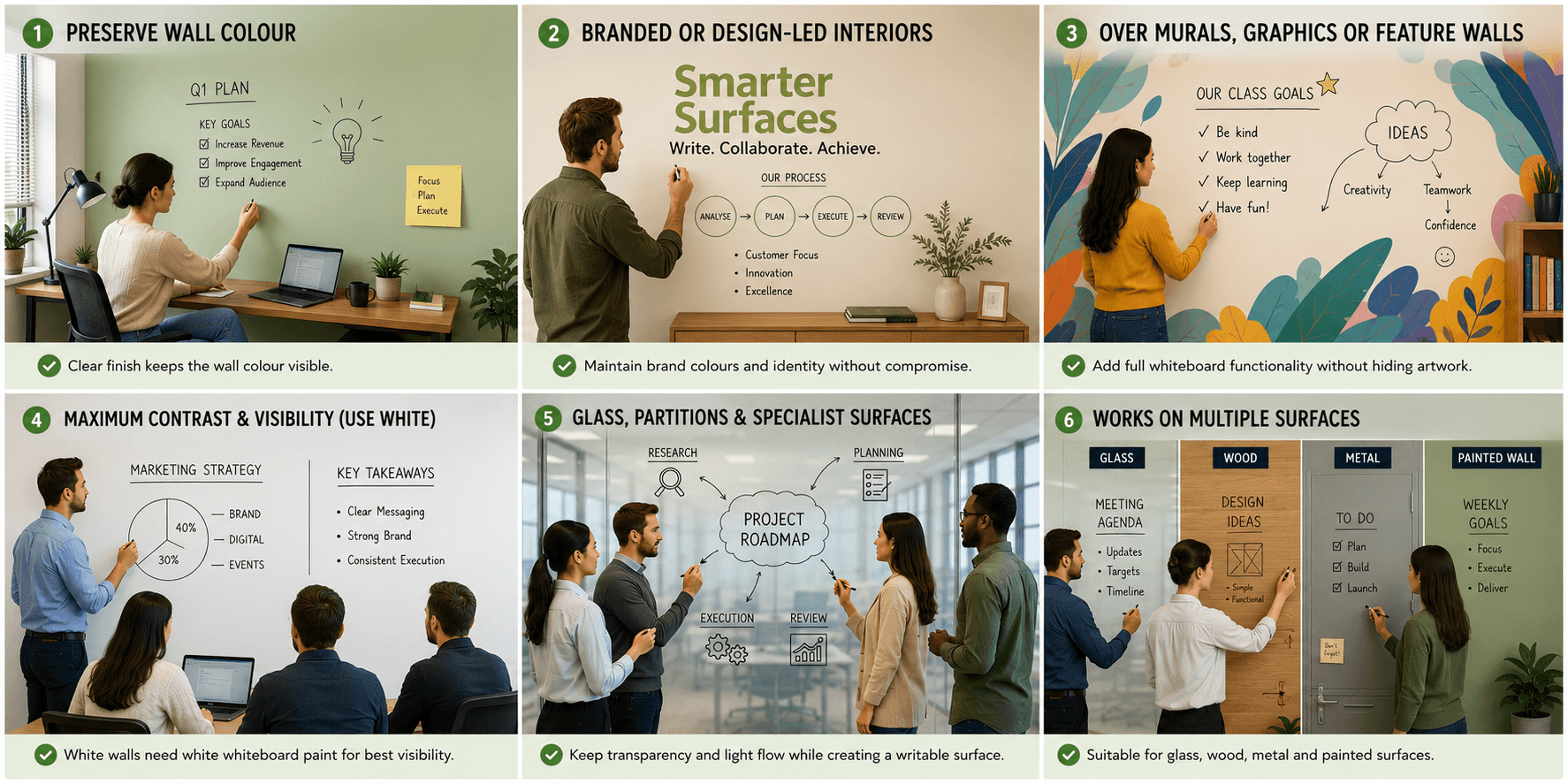
The decision between clear and white is rarely about performance, since both deliver the same writable result. It is about the surface beneath. The six factors below cover the most common scenarios that determine when to use clear whiteboard paint in the UK, from colour preservation through to specialist surfaces such as glass.
When the Wall Colour Must Be Preserved
The most common reason to select clear over white is the presence of a coloured wall. White whiteboard paint would cover that colour completely, so any investment in a feature wall, a corporate shade, or a chosen interior palette would be lost. Clear dry erase wall paint retains the colour in full, while adding complete writable functionality, which makes it the default choice for whiteboard paint for coloured walls in the UK.
For Branded or Design-Led Interiors
In commercial environments, wall colour is rarely arbitrary. Brand guidelines and interior specifications define how a space looks, and an opaque white finish would break that visual consistency. Transparent whiteboard paint office applications allow teams to write and collaborate directly on branded walls without any visible change, preserving the design while adding function.
When Working Over Murals, Graphics, or Feature Walls
Where a wall carries a mural, printed graphics, or decorative detail, a white finish would erase it. A clear coating overlays the artwork without altering it, so the surface gains dry erase functionality while the design remains intact. This is particularly relevant in schools, creative agencies, and customer-facing spaces.
When Maximum Contrast Matters: Marker Visibility and Wall Tone
White remains the better choice where marker visibility is the single most important factor, such as large lecture halls or presentation rooms with viewing distance. A white surface provides maximum contrast for any marker colour. Clear paint over brilliant white can cause a slight yellowing effect from how light interacts with the white paint underneath, which is why white whiteboard paint is recommended instead. Clear is not recommended for white and light colours including beige, vanilla and similar tones. .
For Glass, Partitions, and Specialist Surfaces
Clear whiteboard paint can be applied to glass surfaces, partitions, wood, and metal. The clear finish maintains the appearance of the original material. On glass partitions in particular, a transparent coating preserves light transmission while turning the panel into a functional work surface, something a white finish cannot achieve. It is recommended to use primer before applying the paint.
Choose Paint Based on Wall Tone: Why Clear Is Not Suited to White Walls
The base colour of the wall is the final deciding factor. Clear dry erase wall paint performs across virtually all colours, but it is best suited to mid-tone and darker surfaces where the transparency delivers a visible benefit. On white or very light walls, the white finish is recommended instead, since there is no colour to preserve.
Clear Whiteboard Paint vs White Whiteboard Paint
Clear whiteboard paint preserves the existing wall colour in full, while the white version replaces it with an opaque finish; performance is otherwise identical. The right choice depends on the application context, the tone of the wall, and whether its colour or design carries value.
The table below summarises the core differences to support the choice between the two finishes.
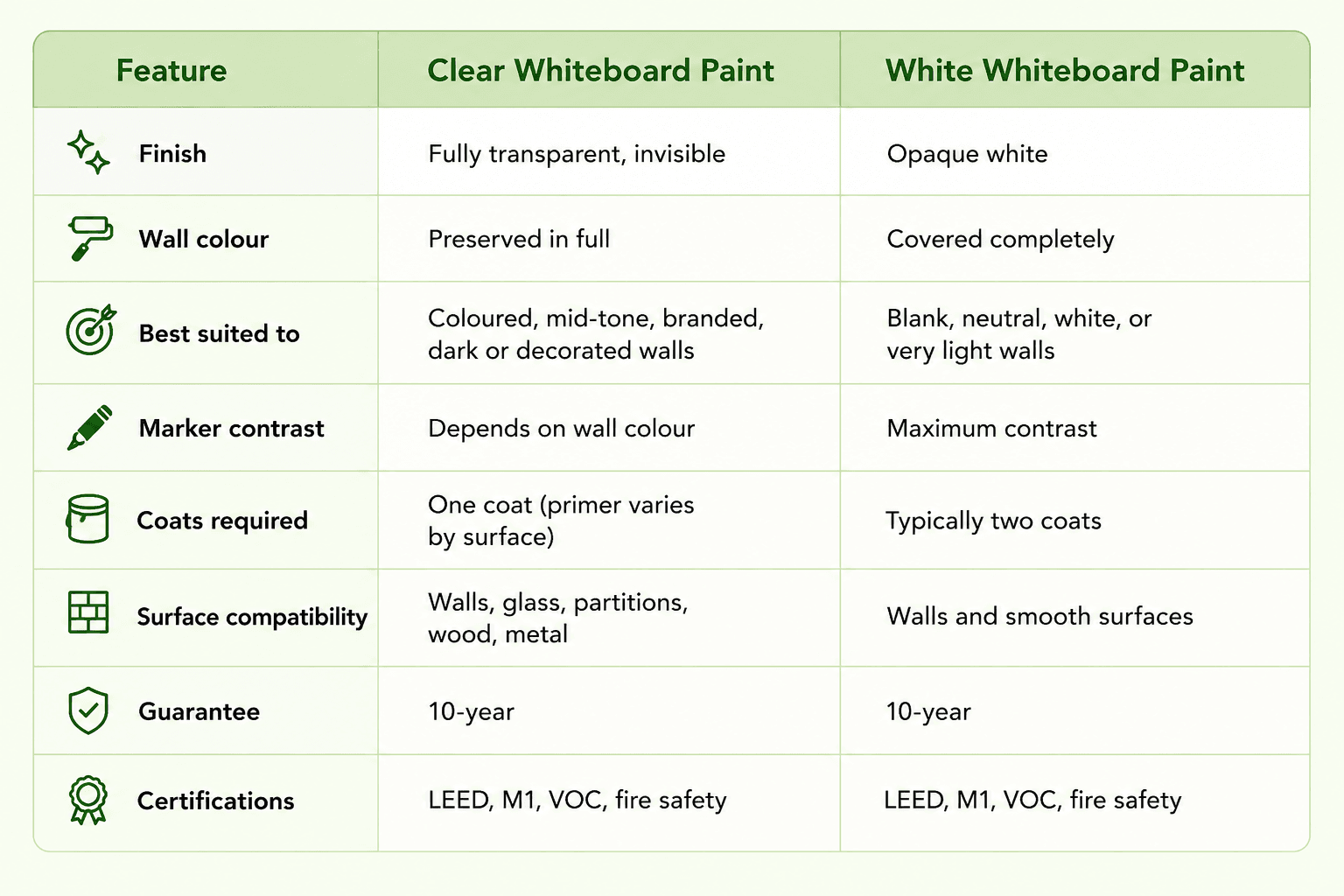
For permanent installations over coloured walls in offices, classrooms, or commercial spaces, Clear whiteboard paint preserves the existing wall colour in full. While the white version replaces it with an opaque finish; performance is otherwise identical. The right choice depends on the application context, the tone of the wall, and whether its colour or design carries value.
Ready to upgrade your experience? Shop Smarter Surfaces’ top-rated products today.

Matt Whiteboard Paint
From £198.00 ex.VAT

Whiteboard Paint White
From £85.00 ex.VAT
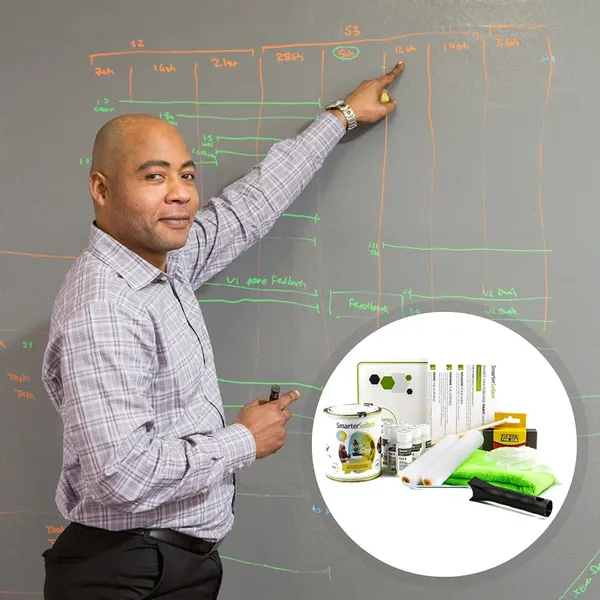
Antimicrobial Whiteboard Paint
From £207.00 ex.VAT
Where Transparent Whiteboard Paint Is the Better Choice

Certain environments consistently favour a transparent finish because design continuity matters as much as function. Offices, classrooms, home working spaces, and glass partitions are the settings where clear is most often the correct decision in the UK. The sections below explain why each environment benefits from an invisible coating rather than an opaque white finish.
In Offices
In design-led workplaces, co-working spaces, and corporate headquarters, wall colour forms part of the brand identity. Transparent whiteboard paint office installations allow these walls to remain on-brand while functioning as writable surfaces. The result is a professional-grade dry erase area that integrates fully into the workspace.
According to a Knight Frank survey of global businesses, 55% expect to increase the proportion of collaborative space in their offices, reinforcing demand for writable surfaces that support teamwork without compromising design. For brand-led teams, this preserves the corporate identity of a space while adding room to think, plan, and collaborate on the wall itself.
In Classrooms
Schools frequently use murals, colour zones, and learning displays that support the curriculum. Transparent whiteboard paint classroom applications convert these walls into dry erase surfaces without covering the existing artwork. For wider education projects, Smarter Surfaces provides dedicated guidance for schools.
One coat of clear whiteboard paint creates a full writable surface regardless of the wall's base colour. Applying whiteboard paint over wallpaper is possible on smooth wallpaper only, but we don't recommend it. You can use two coats of Clear Primer first (if the wallpaper is porous). Textured wallpaper is not suitable. The coating is also isocyanate-free, low odour, and certified as a low-VOC product, so it is safe to apply and use in occupied classrooms around children.
In Home Office
The growth in remote working across the UK has increased demand for functional, design-conscious home offices. Dry erase paint for home office wall projects benefits from a clear finish because the room is usually part of the wider living space.
A coloured or feature wall can gain writable functionality without being covered in white, preserving the room's character. It also removes the need for a bulky wall-mounted board, keeping a home office looking like part of the home rather than a corporate fit-out. Smarter Surfaces Clear Whiteboard Paint is low odour and certified low VOC, making it suitable for residential application with standard ventilation.
On Glass, Partitions, and Special Surfaces
Clear whiteboard paint glass surface applications turn glass dividers and panels into writable areas while maintaining transparency and light flow. In open-plan offices and meeting rooms, this allows existing partitions to double as work surfaces. Where magnetic functionality is also required, Magnetic Whiteboard Paint Clear combines both in one invisible system.
The same transparent coating can convert an entire room into a dry erase space without any visible change, producing an invisible whiteboard paint wall effect across every surface while keeping the chosen colour scheme intact.
Application and Performance Considerations for Clear Dry Erase Wall Paint
ur content goes here. Edit or remove this text inline or in the module Content settings. You can also style every aspect of this content in the module Design settings and even apply custom CSS to this text in the module Advanced settings.
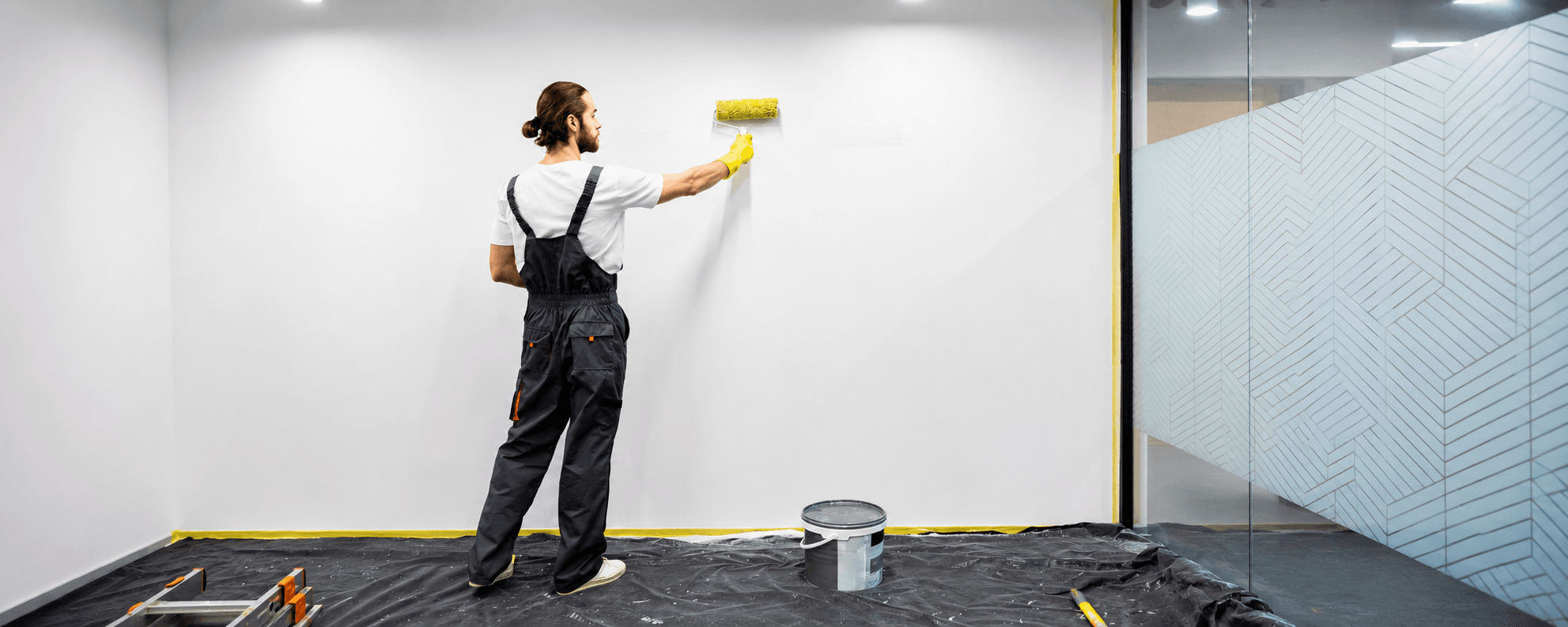
Application requirements for clear whiteboard paint vary by surface. On a painted coloured wall, no primer is usually needed, while absorbent surfaces require priming first. The guidance below covers coats, cost, and how to prevent ghosting.
How Many Coats of Paint and Primer are Required?
One coat of clear whiteboard paint is sufficient to create a full dry erase surface. Any of our whiteboard paints, whether the transparent version or any other type, must be applied very carefully. It is important to avoid over-applying the product. The recommended coverage rate for the specified area and dimensions should always be followed.
Applying too much product, either by using more coats than recommended or by applying a thicker coat, can negatively affect the final finish and the performance of the whiteboard surface.
The surface must be fully smooth before application. Any texture, imperfections, or rough areas will affect both the finish quality and the performance of the dry erase coating.
If the surface is not smooth or there is fresh plaster then apply white primer with ideal 1-2 coats (to seal the surface to and make it non absorbent). You can use clear primer if you want the same finish surface or wall.
H3- Clear Whiteboard Paint Cost Per Square Metre
Clear whiteboard paint cost per square metre varies depending on the kit size you choose, and larger kits work out cheaper per square metre. Before ordering, it helps to measure your surface: to find the area in square metres, simply multiply the width by the height in metres. A wall that is 2 metres wide and 3 metres high, for example, covers 6 square metres (2 x 3 = 6).
Smarter Surfaces Clear Whiteboard Paint is available in three kit sizes to suit everything from small feature walls to commercial projects. The table below shows the price and cost per square metre for each. All prices are ex. VAT.
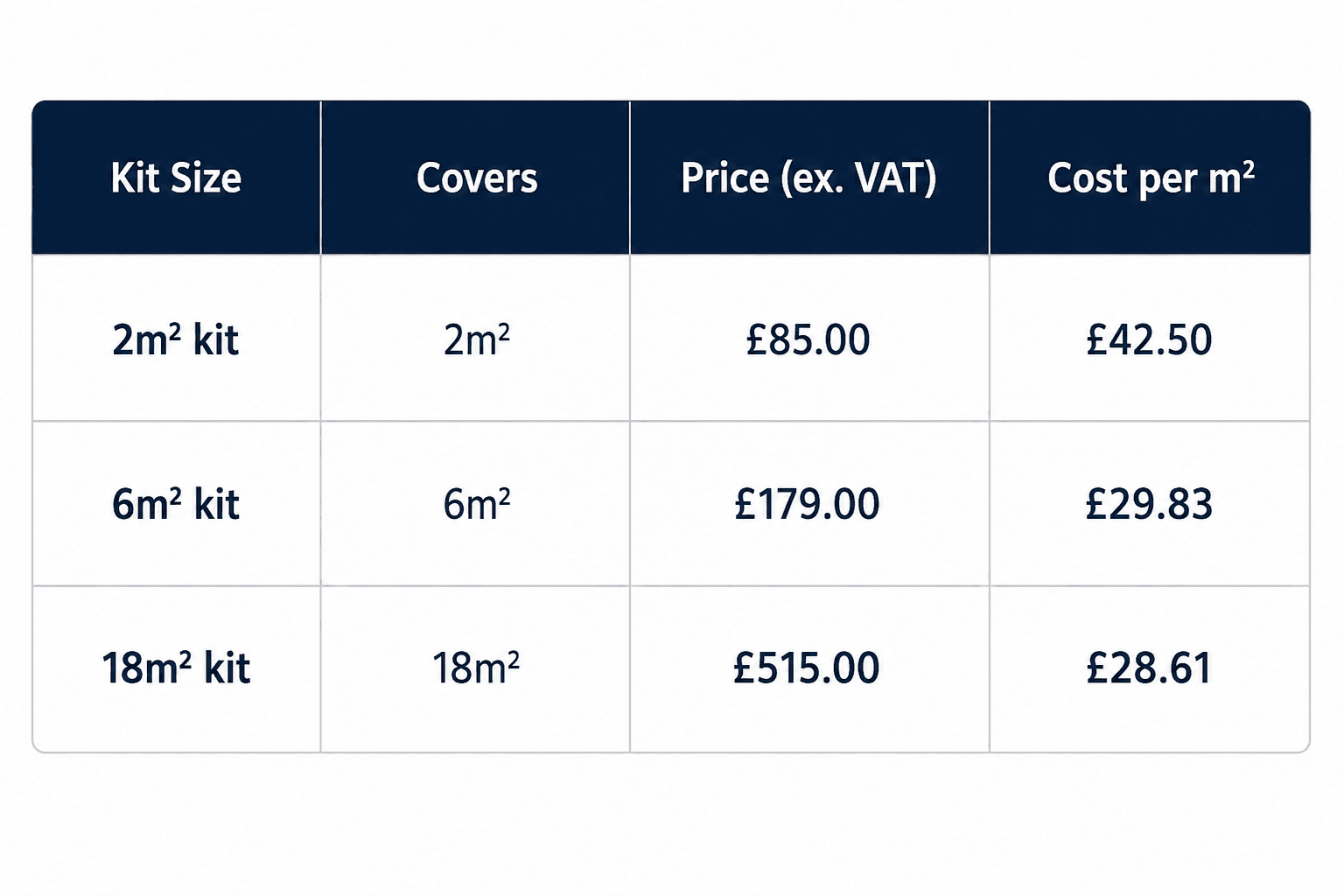
As the table shows, the cost per square metre falls as the kit size increases, so the 18m² kit offers the best value for larger installations. If your surface falls between two sizes, choose the next kit up to ensure full coverage, as one even coat is needed across the whole area. For current pricing, primer options, and coverage details, see the clear whiteboard paint product page.
How to Avoid Whiteboard Paint Ghosting?

Whiteboard paint ghosting, the faint residue left by markers after wiping, is a performance concern that can be avoided through correct application and maintenance. Key steps to prevent ghosting include:
- Applying the paint to a fully smooth surface, using Smarter Surfaces Clear Primer first on absorbent surfaces such as natural wood or polished concrete. Drying time takes 2-4 hours between coats and 12 hours after the final coat has been applied.
- Only after 12 hrs apply the paint and let it sit for some time. The paint will be touch dry after five hours
- Allowing full four-day cure period before use. The cure period allows the two-part coating to fully cross-link and harden. Writing on the surface before this point, even if it feels touch-dry, is the most common cause of premature ghosting and marker staining
- Using high-quality dry erase markers rather than permanent markers
- Cleaning the surface daily during the first 30 days using the supplied microfibre cloth
- Using a standard whiteboard cleaning spray for regular maintenance, and Smarter Surfaces Permanent Ink Remover for stubborn marks
Smarter Surfaces Clear Whiteboard Paint is specifically formulated to resist ghosting and staining, provided these guidelines are followed consistently.
Order Smarter Surfaces Clear Whiteboard Paint today and create a high-performance writable surface that preserves your wall's colour and design.
Conclusion
Knowing when to use clear whiteboard paint comes down to one straightforward question: does the existing wall colour or design need to be preserved? If yes, transparent whiteboard paint is the correct choice.
It delivers the same high-performance dry erase functionality as white variants, while keeping the surface appearance entirely intact. This makes it the preferred solution for branded office environments, colour-coded classrooms, design-led home offices, and specialist surfaces such as glass.
With a 10-year guarantee, independent certifications, and a formulation engineered to resist ghosting and staining, Smarter Surfaces Clear Whiteboard Pa
Table of Contents
Turn Your Wall Into a Smarter Workspace
Upgrade your space with high-performance surface solutions built for productivity.
Try before you buy
Unsure which is the right product for you?
Then choose one of the sample pack options below to try before you buy.
Talk to an Expert
Not sure which projector paint suits your wall?
Get free advice from our surface specialists.
Case Studies



About Author
Sonia Bueno is Senior Manager at Smarter Surfaces, leading sales operations, customer experience, and distributor partnerships globally. With extensive experience supporting education, office, and commercial projects, she shares practical insights on whiteboard paint, magnetic paint, and functional surface solutions to help organisations make informed specification decisions
FAQ's
What surfaces work with clear whiteboard paint?
Clear whiteboard paint can be applied to walls, glass, partitions, wood, metal, and other smooth surfaces. The surface must be clean, dry, and free from imperfections before application. Rough or textured surfaces are not suitable without prior sanding and priming. The slipper surfaces such as metal or glass would always require primer.
Is clear whiteboard paint suitable for white walls?
No. Clear whiteboard paint is not recommended for white or near-white surfaces, as the transparent finish provides no visual contrast benefit in these cases. White whiteboard paint is the appropriate choice for white or light-coloured walls.
How many coats of clear whiteboard paint are needed?
One coat of clear whiteboard paint is sufficient for most surfaces. For fresh plaster and absorbent surfaces, white primer is required. If you want the finish of the coloured surface, then you can use clear primer; paint is sufficient.
Is it possible to apply whiteboard paint over wallpaper?
Yes, it's possible, but we do not recommend as our Whiteboard Paints are designed to apply over walls. If Whiteboard Paint is applied over porous wallpaper, two coats of Clear Primer should be applied first to seal the surface properly before the whiteboard paint is applied.
How do I avoid ghosting with clear whiteboard paint?
Allow the full four-day cure period before use, clean the surface daily during the first 30 days with a microfibre cloth, and use only high-quality dry erase markers. Regular cleaning with a standard whiteboard spray and the use of Permanent Ink Remover for stubborn marks will also help prevent ghosting over time.
What is the difference between whiteboard paint and whiteboard film?
Whiteboard paint vs whiteboard film comes down to permanence and scale. The paint creates a permanent coating best suited to full walls and long-term installations, backed by a 10-year guarantee, while self-adhesive film is best suited to temporary applications, smaller areas, or refurbishing old boards. Both deliver an erasable marker finish.
Will clear whiteboard paint be noticeable on my wall?
A writable wall paint with a clear finish preserves the wall's colour in full, but the coating reflects ambient light slightly differently from standard paint. It gives a glossy finish. For this reason, Smarter Surfaces recommends coating the full wall rather than a single section, so the finish looks uniform across the whole area and remains effectively invisible in day-to-day use.
What is the cost of clear whiteboard paint per m² in the UK?
Cost per square metre depends on the kit size. The 2m² kit is £85.00 (£42.50/m²), the 6m² kit is £179.00 (£29.83/m²), and the 18m² kit is £515.00 (£28.61/m²), all ex. VAT. Larger kits offer a lower cost per square metre, so it is worth measuring your full surface area before choosing a kit.