


White Primer Paint
From £24.00 ex.VAT
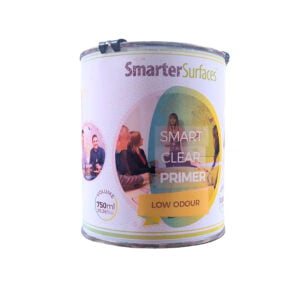
White Primer Paint is a fast-drying, water-based, low VOC formula with a high pigment content and resin composition. It creates a stable base for whiteboard, projector, and other paints.
Commercial grade
Water Based
Longer-lasting
Better Adhesion
- Seals surfaces effectively to maximise topcoat performance.
- Delivers a smooth, even finish with minimal effort.
- Works on plaster, wood, metal, glass, plastic, tiles, ceramics, & composites.
- Eco-friendly formula: low VOC, solvent-free, and isocyanate-free.

Secured Transaction

Easy Returns

Free Shipping above $179.00

Buy now, pay later with Stripe
Why Choose White Primer Paint
A high-performing matt primer designed to improve adhesion, durability, and surface finish for Smarter Surfaces products.

Consistent & Professional Results
Creates a smooth, non-absorbent base that is easy to sand for a flawless finish.

Durable & Stronger Adhesion
Enhances paint bonding and extends the lifespan of topcoats.

Fast-Drying Formula
Reduces drying time between coats for faster project completion.

Low VOC & Eco-Friendly
Low odour, non-hazardous, and environmentally responsible.

Versatile Surface Prep
Provides a reliable base for dry-erase, magnetic, and projection coatings.
Technical Specifications
Coverage / Volume
65 ft² / 25.36 fl oz
Product Colour
White (RAL 9003)
VOC Content
Less than 0.13%
Appearance
Viscous white liquid with a smooth matt finish
pH Level
8.4-8.6, ensuring excellent surface compatibility and stability
Density
Relative density of 1.43 (water = 1)
Solubility
Fully water-soluble for easy application and cleanup
Viscosity
9-10 poise at 20°C (measured using ICI Rotothinner) for even coverage
- Odour: Mild odour for a comfortable application experience
- Flammability: Non-flammable, safe for indoor use around people and equipment
- Chemical Stability: Stable under normal conditions with no hazardous breakdown
- Packaging: Delivers in a secure, resealable container to maintain product quality

Eco-Friendly
Non-bioaccumulative
Safety Compliance
Manufactured in line with European safety standards (EC Regulation No. 1272/2008) and backed by rigorous testing

Orders placed before 12:30 pm GMT (Monday-Friday) are processed the same working day. Orders placed after this time or over the weekend will be processed on the next working day. We work with trusted third-party courier partners for delivery. Delivery times are estimates only and not guaranteed.
Estimated Delivery (Working Days):
UK:
- Next Day Delivery: Available for orders placed before 12:30 pm
- Free Shipping (orders over £80): 2-3 working days
- See delivery times for other locations
How to Apply White Primer For Walls
Create a smooth, sealed base for optimal topcoat performance.

Step 1 - First Coat
Apply an even coat to a clean, smooth surface and allow it to dry fully.

Step 2 - Sand
Lightly sand the dried coat to achieve a smooth, even finish.

Step 3 - Second Coat
Apply a second coat and repeat sanding if needed.
Step 4 - Build as Needed
For new plaster or bare wood, apply additional coats before topcoats.


FAQ's
General Product Questions
Is primer the same as undercoat?
No, primer and undercoat are not the same. Primer is used primarily to seal surfaces, improve adhesion, and block stains, while an undercoat builds colour depth and smoothness before the final paint coat.
What comes first, undercoat or primer?
Primer always comes first. It prepares and seals the surface for proper adhesion. An undercoat, if needed, is applied after the primer and before the final paint finish.
What is white primer paint used for?
White primer paint is used to create a smooth, sealed base that improves paint adhesion, blocks stains, and evens out surface colour before applying top coats or paints.
Why should I use primer paint?
The best white primer paint for walls is actually your secret weapon for better adhesion of performance top coats. It not only boosts the durability of the final finish but also prepares the surface perfectly for other coatings.
Application & Usage
How many coats of primer are needed?
The number of coats depends on the material and condition of the surface. In general, two coats should help attain a smooth, non-absorbent base. However, for tricky surfaces like new wood or plaster, you might need a few extra coats, along with sanding, to get a beautifully smooth finish, especially when prepping for something like whiteboard paint or magnetic paint.
How long should I wait for the primer to dry before painting?
Allow White Primer to dry fully before applying your top coat. This usually takes a few hours, though it can vary depending on the temperature and humidity in the room. However, if you are in a rush, then introducing a bit of heat can speed up the drying process.
What type of roller should I use?
For achieving the best results, particularly when preparing surfaces like whiteboard or magnetic paint, a high-quality foam or mohair roller is your best bet. However, for larger areas, make sure to opt for bigger rollers. If you go for a mohair roller, just ensure to remove any loose fibres before you begin. It will ensure a flawless finish every time.
Surface Prep & Priming
What happens if you paint without primer?
Painting without primer can lead to poor adhesion, uneven colour, increased paint absorption, and reduced durability, especially on new, porous, or strongly coloured surfaces.
Do I need to sand after priming?
Absolutely yes. Sanding after the primer coat ensures you have achieved a nice, smooth surface ready for the final finish. This is especially crucial when applying any coatings like whiteboard paint.
What materials can I use this primer on?
White Primer is extremely versatile. It works wonders on a wide variety of surfaces such as wood, plaster, glass, drywall and other similar absorbent materials or surfaces with low surface tension. So if it’s a surface that needs prepping, this primer has certainly got you covered.