

How to Make a Magnetic Wall: Complete DIY Guide for Homes
Table of Contents
A magnetic wall can be one of the most useful surfaces in a home. A kitchen panel that holds the week's meal plan. A bedroom wall that displays artwork without a single pinhole. A home office section that keeps projects visible and organised.
Getting there is simple, but the details matter: the right product, enough coats, the right magnets, and the right sequence. Skip one of those, and the results will disappoint.
This guide covers every step: how to create a magnetic wall for the home, which product to choose for your room, how to apply it correctly, how many coats to use, and what to do if the hold is not as strong as expected.

What Is a Magnetic Wall?

A magnetic wall is an interactive, magnet-friendly surface designed to display notes, photos, artwork, planning tools, educational resources, and business documents without Blu Tack marks, nail holes, drawing pins, or adhesive tape. It helps reduce wall damage while keeping information organised and easily accessible.
Magnetic walls are used in homes, classrooms, offices, meeting rooms, and commercial environments, where they transform unused wall space into practical display and collaboration areas. They can cover an entire wall or a smaller feature section depending on the application.
Depending on your project requirements, a magnetic wall can be created using Magnetic Paint, Magnetic Whiteboard Paint, Super Magnetic Paint, Magnetic Whiteboard Wallpaper, or Magnetic Plaster. Each solution offers different installation methods, surface finishes, and levels of magnetic strength. While paints and wallpaper are well suited to DIY home projects, Magnetic Plaster provides the strongest magnetic performance and is typically specified for professional renovations and commercial installations.
Magnetic Wall vs. Traditional Alternatives
Before choosing a magnetic wall, it helps to compare it with other popular home organisation solutions. Unlike cork boards, fridge doors, or standard notice boards, a magnetic wall creates a larger, clutter-free surface that integrates seamlessly into your decor while keeping notes, photos, reminders, and artwork organised. Magnetic Paint and Super Magnetic Paint can be painted over in virtually any colour, allowing the wall to match your existing decor while retaining its magnetic functionality. It can cover an entire wall or a custom-sized section, giving you far more flexibility than smaller magnetic surfaces.
For added functionality, Magnetic Whiteboard Paint combines magnetic performance with a durable dry-erase finish, allowing you to write, erase, and display items on the same surface. If you prefer a classic writable finish without magnetic functionality, Chalkboard Paint provides a practical alternative for creative spaces, family message centres, and children's play areas.
Which Magnetic Product Is Right for a Home DIY Project?
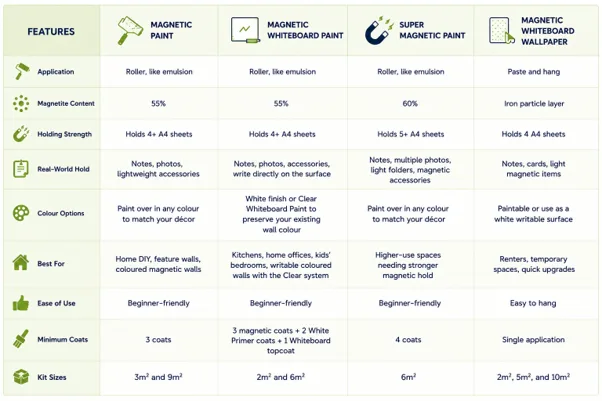
For most home DIY projects, Magnetic Paint or Magnetic Whiteboard Paint is the right starting point. Both are beginner-friendly, applied by roller like standard emulsion, and well-suited to kitchens, home offices, hallways, and children's bedrooms. Super Magnetic Paint is a step up if you need a stronger hold. Magnetic Whiteboard Wallpaper suits renters or anyone who cannot apply paint.
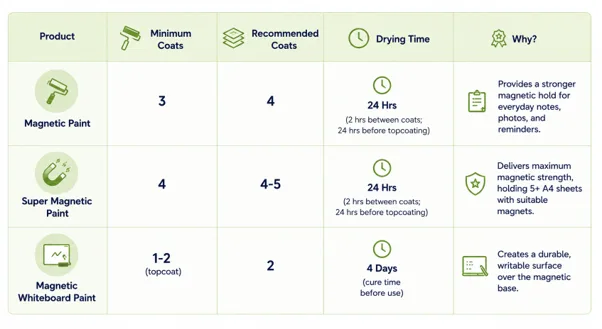
Here is how the home-friendly products compare:
If maximum magnetic strength is the priority, Magnetic Plaster is the highest-performance option. It contains approximately 75% magnetite and can hold 8+ A4 sheets with a suitable magnet, making it ideal for study rooms, home offices, and display walls. Because it requires professional plaster application, it is generally recommended during renovations or new builds rather than DIY home projects.
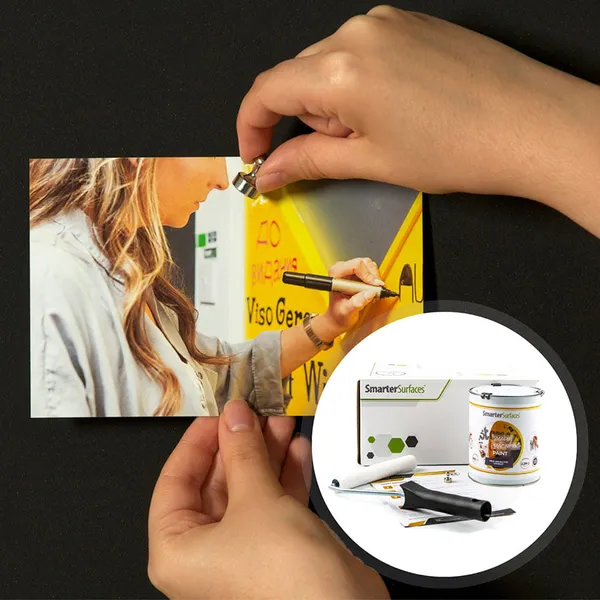
Ready to upgrade your experience? Shop Smarter Surfaces’ top-rated products today.
Magnetic Paint
From £61.00 ex.VAT

Magnetic Whiteboard Paint White
From £142.00 ex.VAT

Magnetic Whiteboard Paint White
From £142.00 ex.VAT
Which magnetic wall product is right for you?
For the Home
If you want a magnetic wall in a kitchen, hallway, or living space to display shopping lists, family photos, children's artwork, or reminders while matching your existing decor, Super Magnetic Paint is the recommended choice. Its stronger magnetic performance allows you to paint over the magnetic layer with your chosen interior wall colour without compromising functionality. The result is a discreet magnetic wall that blends seamlessly into your home while providing a practical surface for everyday organisation.
For a Home Office or WFH Setup
Need a space to organise tasks, calendars, meeting notes, and documents? Magnetic Whiteboard Paint creates a wall that is both magnetic and writable, making it ideal for planning and productivity without taking up desk space. The white or clear finish - which allows you to have a whiteboard and magnetic surface of the colour you choose - means no additional topcoat is needed, and the surface is wipe-clean from day one.
For Families and Kids' Rooms
Super Magnetic Paint is the stronger option for a children's bedroom or playroom. Its higher magnetic hold keeps educational magnets, artwork, chore charts, alphabet letters, and multiple photos securely in place. A practical step up for any space that sees heavy daily use.
For Creative Spaces
Artists, designers, and hobbyists can use Magnetic Whiteboard Paint to sketch ideas, plan projects, and display inspiration boards. The combination of a writable and magnetic surface works well for visual workflows and mood boards.
For Renters and Temporary Spaces
If you cannot paint your walls, Magnetic Whiteboard Wallpaper offers a practical alternative to paint-based solutions. It creates a durable magnetic dry-erase surface without requiring whiteboard or magnetic paint, making it ideal for smooth walls and other flat or curved surfaces. With both writable and magnetic functionality, it is well suited to home offices, study spaces, and other areas where a professional, collaborative surface is needed.
How to Make a Magnetic Wall at Home with Paint: Step-by-Step
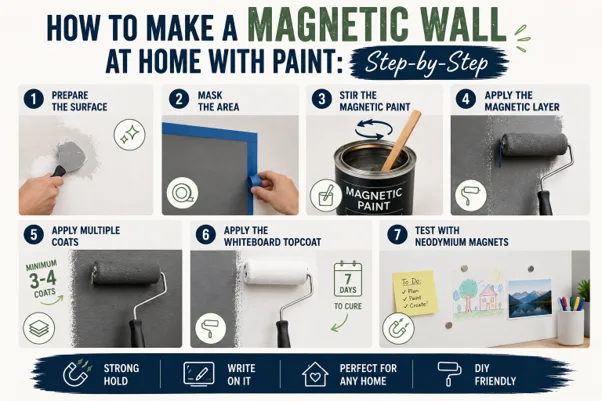
Here is the process to create a wall using Magnetic Whiteboard Paint:
Step 1: Prepare the surface
The wall must be clean, dry, and smooth. Fill any cracks or holes and sand down rough patches. If the wall is absorbent (bare or new plaster), apply White Primer first and allow it to dry fully.
Step 2: Mask the area
Use painter's tape to mark the edges of the area you want to treat. This keeps lines clean and makes application easier.
Step 3: Stir the magnetic paint
Stir thoroughly before every coat. Iron particles settle in transit and again between coats. A thorough stir before each coat costs nothing and makes a significant difference to final performance.
Step 4: Apply the magnetic layer
Use a short-pile or mohair roller for an even, consistent coat. Apply using overlapping strokes. Work steadily. Allow the first coat to dry fully (after approximately 2 hours) before applying the next coat.
Step 5: Apply multiple coats
Plan for a minimum of three to four coats of the magnetic layer. More coats equal a stronger hold. We test every batch of Magnetic Paint at our manufacturing site for particle density: three coats consistently meet the 4+ A4 sheet specification on a properly primed wall. Four coats reliably exceed it, which is why we recommend four for the best home result.
Step 6: Apply the whiteboard topcoat
Once all magnetic coats are fully dry, apply two coats of White Primer, or continue until the black magnetic surface is completely covered. Allow the primer to dry between coats. Once the primer is dry, apply one coat of Whiteboard Paint using a brand-new roller to prevent iron particles from transferring from the magnetic coats. Allow the surface to cure fully before writing on it.
Step 7: Test with neodymium magnets
Use small neodymium (rare earth) magnets for best results. Standard ceramic fridge magnets are much weaker and will not perform reliably on a magnetic paint surface.
How Many Coats Does Magnetic Paint Need?
The number of coats you apply has the biggest impact on how well your magnetic wall performs. Each coat adds more iron particles to the surface, increasing the magnetic strength and allowing magnets to hold more securely. Rushing the coat count is the single most common reason magnetic walls underperform.Between each coat, allow the paint to dry fully (approx 2 hours) before recoating. Applying a second coat over a wet first coat traps moisture and reduces the effectiveness of both layers.
Once all magnetic coats are fully dry, apply two coats of White Primer, or continue until the black magnetic surface is completely covered. After the primer has dried, apply one coat of Whiteboard Paint using a clean, new roller to achieve a smooth, writable finish.
Allow the completed surface to cure fully before writing on it or attaching magnets. During curing, the coating chemically cross-links to form a hard, durable, wipe-clean surface
What Magnets Work Best on a Magnetic Wall?

Neodymium (rare earth) magnets are the right choice for any magnetic wall surface. They generate significantly stronger magnetic flux than standard ferrite fridge magnets, which is why even a small neodymium magnet outperforms a much larger ceramic one. The type of magnet you use has as much impact on results as the paint itself.
Neodymium Magnets: Why They Work
Neodymium magnets generate roughly 10 to 15 times the magnetic flux of standard ferrite (ceramic) fridge magnets per cubic centimetre. That is why a 5mm neodymium magnet holds notes that a much larger fridge magnet will not.
Small neodymium magnets hold notes, photos, and lightweight accessories with ease. Larger neodymium magnets can hold heavier items such as document folders and lightweight clipboards. If you have tested your wall with a standard fridge magnet and it slips, switch to neodymium magnets before drawing any conclusions about the paint.
How Magnetic Paint Works with Neodymium Magnets
Magnetic paint is engineered specifically to work with neodymium flux strength. The iron particles embedded in each coat create a receptive surface that responds to the pull of rare-earth magnets. With standard ferrite fridge magnets, the surface is capable of far more hold than the magnet can deliver. This is why magnet type is the first thing to check if your magnetic wall is underperforming, before adding more coats or repainting.
Magnetic Wall Ideas for Every Room
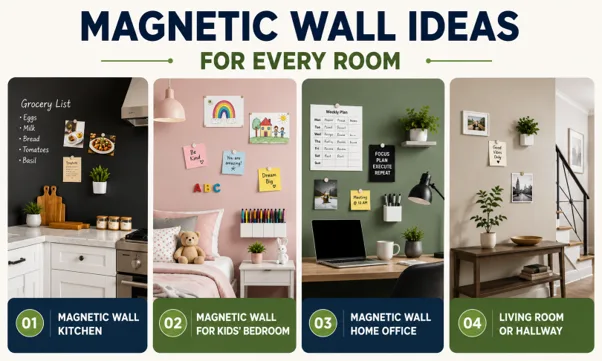
A magnetic wall adds practical value across almost every room in a home. The right product depends on the room, how heavily the surface will be used, and whether a writable finish is also needed. Kitchens and home offices suit Magnetic Whiteboard Paint. Kids' bedrooms benefit from Super Magnetic Paint. Hallways and living rooms are where Magnetic Whiteboard Wallpaper works best.
Magnetic Wall Kitchen
Instead of covering the fridge with notes and magnets, create a dedicated family organisation space for meal plans, shopping lists, weekly schedules, recipes, and children's school reminders. Everything stays visible, organised, and easy to update while reducing everyday kitchen clutter.
Apply Magnetic Paint or Magnetic Whiteboard Paint on a panel next to the fridge or on a dedicated wall section. The white or clear finish of Magnetic Whiteboard Paint makes the surface both magnetic and wipe-clean, which suits a kitchen environment well.
A typical kitchen magnetic wall panel is between 1 and 2 square metres. Magnetic Paint is available in 3m² and 9m² kits, and each kit already includes all the coats needed for its stated coverage. For a 1 to 2m² kitchen panel, the 3m² kit covers the full three-coat application with paint to spare for touch-ups. A 6m² Super Magnetic Paint kit covers a 2m² panel with the full three-coat application, leaving enough for touch-ups.
Magnetic Wall for Kids' Bedroom
A magnetic wall for kids creates an interactive, creative space that grows with them. As children grow, the same wall easily evolves from displaying alphabet magnets and artwork to organising homework, revision notes, creative projects, and personal achievements, without needing to redecorate. It also encourages more screen-free creativity by giving children a dedicated space to draw, display artwork, organise learning activities, and showcase their favourite creations.
To create a writable planner or creative wall, Magnetic Whiteboard Paint is the best choice. It combines magnetic functionality with a smooth dry-erase surface, and the Clear Whiteboard Paint option allows you to preserve your chosen wall colour while adding both writable and magnetic functionality. This makes it an excellent choice for children's bedrooms where the decor can remain colourful and personalised.
If you prefer a traditional chalk writing surface, Super Magnetic Chalkboard Paint combines magnetic functionality with a durable chalkboard finish, giving children a space to draw with chalk while displaying artwork, photos, and learning materials using magnets. All Smarter Surfaces magnetic paints are low-VOC, solvent-free, and isocyanate-free, making them suitable for use in children's bedrooms.
Magnetic Wall Home Office
A magnetic whiteboard wall transforms a home office into a more organised and productive workspace. Instead of relying on a small desktop whiteboard or a separate pinboard, you can create a large writable and magnetic surface for planning projects, brainstorming ideas, tracking tasks, and displaying important documents. A typical home office feature wall is between 1.5 and 2.5 square metres, making it easy to create a dedicated planning area without taking up additional floor space.
Magnetic Whiteboard Paint is the best choice for most home offices because it combines a smooth dry erase surface with magnetic functionality in one system. Write notes, calendars, and project plans directly on the wall while using magnets to display reference sheets, reminders, or lightweight documents. The Clear Whiteboard Paint option also allows you to preserve your existing wall colour, helping the workspace blend seamlessly with your home décor.
Like all Smarter Surfaces products, Magnetic Whiteboard Paint is low VOC, solvent-free, and isocyanate-free, making it well suited to home offices where people spend long hours working indoors.
This aligns much better with how people actually use home office walls and subtly promotes the Clear option, which is a strong homeowner benefit.
Living Room or Hallway
A small magnetic panel in a hallway can become the family's central communication hub using magnetic plaster. It is suitable for calendars, invitations, appointment reminders, shopping lists, spare keys on magnetic hooks, and weekly schedules so everyone knows what's happening at a glance.
For renters or anyone who cannot paint walls, Magnetic Whiteboard Wallpaper is the practical alternative. Because it removes cleanly, renters can personalise their living space without worrying about damaging walls or losing their deposit when it's time to move out. It holds light magnetic items and cards, making it a good low-commitment option for a feature wall or hallway panel.
Whether you're organising a busy family kitchen, encouraging creativity in a child's bedroom, or building a more productive home office, a magnetic wall adapts as your needs change, making it a practical investment for years to come.
Common Magnetic Wall Mistakes Homeowners Should Avoid
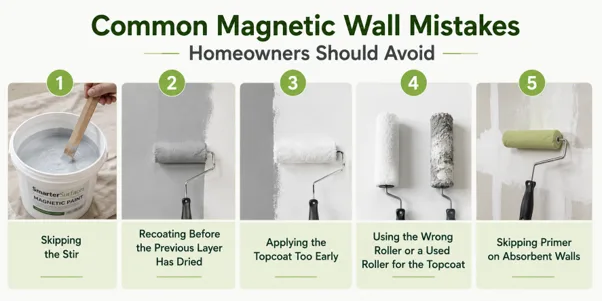
1. Skipping the Stir
Iron particles settle to the bottom of the tin between coats. Skipping the stir before each coat is the most common single cause of inconsistent magnetic hold that our team sees. A thorough stir before every application takes under a minute and directly affects how evenly the iron particles distribute across the surface.
2. Recoating Before the Previous Layer Has Dried
Applying a second coat over a wet first coat traps moisture, reduces the adhesion of both layers, and weakens the finished surface. Each coat must be fully dry before the next one goes on. Rushing this step does not save time: it typically means the whole job needs to be redone.
3. Applying the Topcoat Too Early
The magnetic layer must be fully dry before applying two coats of White Primer, or until the black magnetic surface is completely covered. Once the primer has dried, apply one coat of Whiteboard Paint. Applying the primer or whiteboard topcoat too early can trap residual moisture, affecting both the magnetic performance and the quality of the writable surface. Allow the completed system to cure fully before use.
4. Using the Wrong Roller or a Used Roller for the Topcoat
Use a short-pile or mohair roller for the magnetic layer. For the whiteboard topcoat, always use a brand-new roller. A roller that has been used for the magnetic paint will carry iron particles that transfer to the topcoat and leave marks in the finished surface.
5. Skipping Primer on Absorbent Walls
Bare plaster, new plaster, or any highly absorbent surface will soak up the magnetic paint before it can form a proper layer. Apply White Primer first and allow it to dry fully. This creates a sealed base that allows the magnetic layer to sit correctly and perform as intended. This is particularly important on newly plastered walls, which can look dry on the surface while still drawing moisture from below.
Magnetic Paint Not Holding? Here's What to Check
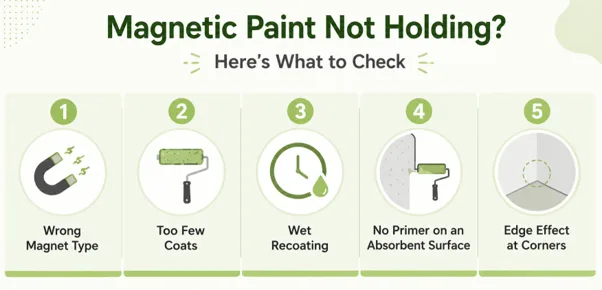
Magnetic paint not holding magnets is almost always caused by one of a small number of fixable issues. The most likely cause is the magnet type, not the paint. Switch to neodymium magnets first, before anything else. Work through this checklist before repainting:
Wrong Magnet Type
Standard fridge magnets are ferrite (ceramic) magnets with very low pull strength. They will not perform reliably on any magnetic paint surface, regardless of how many coats were applied. Replace them with neodymium (rare earth) magnets. Even small neodymium magnets will hold notes, photos, and lightweight accessories on a correctly applied magnetic surface.
Too Few Coats
Three coats are the minimum. Four is better. If only one or two coats were applied, add further coats over the existing surface once it has dried, without sanding back.
Wet Recoating
If coats were applied before the previous one had dried fully, moisture was trapped between layers. This reduces the effective iron particle density and weakens the magnetic hold. Allow future coats to dry completely before recoating.
No Primer on an Absorbent Surface
On bare or new plaster, unpainted masonry, or any highly absorbent wall, the magnetic paint is absorbed before it can form a proper layer. Apply White Primer, allow it to dry fully, then recoat with the magnetic layer.
Edge Effect at Corners
Holding strength is typically weaker at the very edges and corners of a painted area. This is a normal characteristic of any applied coating: the layer thins slightly at masked edges. For best results, keep magnet placement toward the centre of the painted section.
Final Words
Knowing how to make a magnetic wall opens up practical possibilities in almost any room. The process is manageable for most home DIY projects: prepare the surface correctly, stir before every coat, apply four coats of magnetic paint, use neodymium magnets, and allow a few days before writing on the surface.
For a wall that is both magnetic and writable, Magnetic Whiteboard Paint is the primary recommendation for home use. For a stronger hold in a busy home office or active kids' bedroom, Super Magnetic Paint is a straightforward step up. For renters, Magnetic Whiteboard Wallpaper removes the need to paint entirely.
Manufactured in the UK using high-quality raw materials, Smarter Surfaces products have been trusted by homeowners, schools, and businesses in more than 20 countries since 2009. Every product carries a 10-year guarantee to deliver long-lasting performance. They are independently certified by Eurofins (M1 / Indoor Air Comfort) and BTTC (fire-certified, 2018) for low-VOC, solvent-free, and isocyanate-free formulations, suitable for indoor spaces.
Table of Contents
Turn Your Wall Into a Smarter Workspace
Upgrade your space with high-performance surface solutions built for productivity.
Try before you buy
Unsure which is the right product for you?
Then choose one of the sample pack options below to try before you buy.
Talk to an Expert
Not sure which projector paint suits your wall?
Get free advice from our surface specialists.
Case Studies



About Author
Sonia Bueno is Senior Manager at Smarter Surfaces, leading sales operations, customer experience, and distributor partnerships globally. With extensive experience supporting education, office, and commercial projects, she shares practical insights on whiteboard paint, magnetic paint, and functional surface solutions to help organisations make informed specification decisions
FAQ's
Can I paint over magnetic paint with any colour?
Yes. Magnetic Paint and Super Magnetic Paint are designed to be painted over with your preferred wall colour once the magnetic layer has fully dried. This allows you to match existing décor without affecting magnetic performance, as the magnetic layer remains underneath the decorative topcoat.
Can I write directly on magnetic paint?
Standard Magnetic Paint is not writable by itself. If you need a surface that is both magnetic and writable, choose Magnetic Whiteboard Paint. It combines magnetic functionality with a durable dry-erase finish in one system, creating a surface suitable for writing notes, planning, brainstorming, and displaying documents with magnets.
Why is my magnetic paint not holding magnets?
Magnetic paint usually underperforms because of one of four common issues rather than the paint itself. The most frequent cause is using standard fridge magnets instead of stronger neodymium magnets. Too few magnetic coats, insufficient drying time between coats, or skipping primer on absorbent walls can also reduce holding strength. Before repainting, check each of these factors, as most magnetic performance issues can be corrected without starting over.
Is magnetic plaster also suitable for home use?
Magnetic plaster is a high-performance product designed for schools, meeting rooms, and commercial installations. It requires plastering experience to apply and is not recommended for home DIY projects. For home use, Magnetic Paint, Magnetic Whiteboard Paint, and Super Magnetic Paint are the right options.
How much does it cost to make a magnetic wall?
H3 - How much does it cost to make a magnetic wall?
The cost depends on the size of the wall and the product you choose. A small kitchen or home office panel costs significantly less than covering an entire wall. Magnetic Paint is the most economical option, while Magnetic Whiteboard Paint combines magnetic performance with a writable finish. Choosing the correct kit size helps reduce waste and ensures enough coats for the best magnetic strength.
How long does magnetic paint take to dry?
Allow 2 hours between each coat of Magnetic Paint. Once the final magnetic coat has been applied, wait 24 hours before applying two coats of White Primer, or until the black magnetic surface is completely covered. Once the primer has dried, apply one coat of Whiteboard Paint if you require a writable surface. Following the recommended drying and curing times helps ensure maximum magnetic performance and a durable, long-lasting finish.
Is magnetic paint safe for children's bedrooms?
Yes. Smarter Surfaces magnetic paints are low-VOC, solvent-free, and isocyanate-free, making them suitable for indoor spaces including children's bedrooms, playrooms, home offices, and kitchens. Once fully cured, they provide a durable surface for everyday family use.