It’s not an easy feat to keep today’s digitally active students effectively engaged in the classroom. A whiteboard is just not enough to spark curiosity and fuel engagement. If you’re looking for a way to transform classroom experiences for your students, magnetic projector surfaces are the best solution.
Imagine a versatile surface that seamlessly combines two or three powerful functionalities: write on them, stick things to them, and project images onto them. On top of that, there’s no size limitation. Any section of the classroom — walls, glass partitions, desks — can turn into an effective collaboration space.
Let’s explore how this innovative solution is revolutionising classrooms.
How do multifunctional writable surfaces improve learning environments?
Writable magnetic projector surfaces offer a dynamic and interactive learning space. They are ideal for educational establishments of any size. You can also use them in corporate meeting rooms and creative spaces.
Let’s take a quick look at how this multifunctional solution brings life to your classrooms.
Write, draw, and share with ease
Wide sharing space: Writable magnetic projector surfaces ensure that your students are not limited by space when it comes to learning and sharing ideas. You get a wide canvas to write, draw and scribble. And, you have the freedom to turn any flat or even curved surface into a whiteboard.
Start with a clean slate every time: These surfaces are simple to clean. You won’t have to worry about stains and ghost lines again. Once erased, the ink is removed completely, leaving a pristine surface for you to write on.
Works with the same supplies: No need to buy new supplies. These multifunctional surfaces are compatible with your existing whiteboard markers and erasers.
Magnetic capabilities for more interactive lessons
Ideal for visual learning: Foster collaboration and visual learning with the magnetic features. Students can stick mind maps, diagrams, or project resources directly onto the wall. This creates a vibrant and engaging learning experience.
Explore kinesthetic learning: The combination of writing and manipulating magnetic pieces creates a tactile learning experience. This promotes a more engaging and memorable way for students to learn by doing.
Gamify your classroom: Make learning fun and engaging. Incorporate magnetic games and activities into your lessons. Students can use magnetic pieces to represent characters, solve puzzles, or compete in educational challenges. This playful approach promotes critical thinking, problem-solving skills, and a love for learning.
Provide personalised instructions: The magnetic feature allows you to cater to diverse learning styles and abilities. Create differentiated learning activities by providing students with manipulatives, visual aids, or vocabulary words on magnetic tiles. This personalised approach ensures that every student can access the information and participate in the learning process.
Unlock a world of possibilities
The projection capabilities of magnetic projector walls open up a new dimension in teaching. Take your lessons beyond textbook pages and create a truly engaging learning environment.
Immersive learning: Project captivating documentaries, high-resolution images, or interactive virtual tours on a wide surface. It will take students to the heart of the subject matter more easily.
Interactive presentations: Create dynamic presentations with images, text, and even handwritten notes directly on the projected wall. Magnetic projector walls let you stick papers and pictures right on the spot. This encourages a more interactive and effective learning experience.
Digital resources integration: Seamlessly integrate digital resources with traditional classroom activities. It is ideal for a well-rounded learning approach.
What are the other advantages of using writable magnetic projector walls in educational settings?
Quick cleanup: High-quality, no-stain whiteboard surface for quick erase and cleanup with minimal effort.
Reduced clutter: Forget overflowing bulletin boards and cluttered desks. The magnetic surface provides a centralised space for displaying information and student work. It promotes a more streamlined learning environment.
Saves time: Spend less time setting up and more time engaging with your students. The versatility of these surfaces allows for a seamless flow of information throughout the lesson.
Versatile projection compatibility: Whiteboard projection surfaces offer exceptional versatility. They function flawlessly with a wide range of projectors, including standard, interactive, 3D, and 4K models.
Simple application: Multifunctional surface solutions from our brand are simple to apply. No need for professional installation with the films and paints. Professional help is suggested only for applying the wallpapers.
Minimum downtime: You can start using the projection screen whiteboard film right after application. The wallpaper and the paint will be ready to use in just 48 hours and 4 days respectively.
Cost-effective: These high-quality multifunctional surface solutions need minimum maintenance. They do not yellow over time. The paint and wallpaper comes with a 10-year long guarantee.
Smarter Surfaces’ multifunctional magnetic projector surface solutions are the best in the market.
Leading schools. colleges, and universities across the UK and beyond are embracing our innovative dual and 3-in-1 surface solutions. They effectively cater to diverse educational needs and are a trusted choice. The University of Cambridge, the University of London, and Eton Primary School are a few on the list.
There are six variants in our dual-functionality surface solution range, including paint, wallpaper, and film options. These come in a variety of finishes and transparency levels (white, matte, clear) to perfectly match your needs.
The Magnetic Whiteboard Paint and Projector Whiteboard Wallpaper are two top products from the range.
The Magnetic Whiteboard Paint boasts commercial-grade performance. It offers a durable and smooth writing surface. The magnetic properties allow you to display notes, images, and hold up to 4 A4 paper sheets. Compatible with smart neo-magnets for versatile collaboration and information sharing. For a hassle-free, DIY application, the kit includes all the necessary items and primer.
The Projector Whiteboard Wallpaper is perfect for classes where projectors instil life into lessons. You can project on the wallpaper and write on it at the same time, making lessons truly interactive. It has excellent projector performance. The low sheen finish reduces glare and ensures optimal readability. Want to know what our customers are saying? Check out this testimonial video.
The Magnetic Projector Screen Whiteboard Wallpaper is our 3-in-1 premium offering. It revolutionises how lessons are planned and conducted.
The Magnetic Projector Screen Whiteboard Wallpaper combines all three functionalities, delivering the best the latest technology has to offer. This top-of-the-shelf surface solution offers excellent whiteboard and projection performance. Plus, it can hold as many as 5 sheets of A4 papers. Low sheen finish for reduced glare. It has a no-ghosting surface and is resistant to stains.
The takeaway
In today’s digital world, classrooms need to be interactive and immersive. It’s how you capture student attention and ensure knowledge sticks. Writable magnetic projector surfaces offer an effective, affordable, and hassle-free solution. They transform your classroom and lesson delivery within days.
Many top institutions have adopted our magnetic projector solutions to enhance their teaching spaces. If you want to level-up your students’ learning experience, explore our range on the website.
Not sure which multifunctional surface solution will be best for your needs? We are here to help. Contact us for professional guidance and learn more about our education programme. We will help you find the perfect solution to unlock a more engaging and interactive learning environment for your students.
Tired of flimsy whiteboards and limited planning space? Ever wished your tactical talks had more impact? Look no further than the sports whiteboard walls. These versatile surfaces are transforming the way coaches strategise and athletes train.
Read on and discover 9 invaluable applications of whiteboard walls in sports coaching that will take your training centre from good to great!
9 Applications of sports whiteboard walls in sports coaching
Here are some of the ways these clubs and many more from across the globe are using sports whiteboard walls to enhance coaching and improve performance.
Tactical planning without space limitation: With whiteboard walls, you’ll never be limited for space again. Sketch out elaborate plays, formations, or training drills in life-size detail. No more struggling to cram everything into a tiny whiteboard.
Make instructions crystal clear: Visual aids are a powerful tool for learning. And, sports whiteboard walls provide the perfect canvas. Break down complex techniques step-by-step with diagrams, arrows, and written instructions. Your athletes will grasp concepts faster and retain more information.
Effortless collaboration and brainstorming: Sports whiteboard walls encourage interactive sessions. Coaches and athletes can work together, sketching ideas, revising strategies, and fostering a collaborative training environment without running out of writing space.
Personalised training plans and goal tracking: Collaborate with each athlete to set both short and long-term goals directly on the whiteboard wall. Highlight key performance metrics. Visualise progress with charts and graphs. This creates a shared vision and keeps athletes focused.
Nutrition and hydration tracking: The right diet is crucial for every sportsman. Custom whiteboard walls are perfect for creating a visual food and hydration log. Adapt the log to cater to different dietary requirements or training demands. Athletes can track their daily intake and coaches can monitor overall athlete well-being on the same shared space.
Schedules and team rosters: Ensure clear communication and organisation with a dedicated shared space for training schedules and practice rotations. Outline drill sequences, workout times, and rest periods. Announce starting lineups and player positions clearly on the whiteboard wall. This eliminates last-minute confusion and ensures everyone is on the same page.
Live performance analysis: During training games or scrimmages, use the whiteboard wall to capture key plays in real time. Analyse them with your team afterwards, highlighting strengths, weaknesses, and areas for improvement.
Opponent scouting and strategy: Leverage the sports whiteboard wall for a strategic advantage. Deconstruct your opponent’s offensive plays, defensive schemes, and key players by dedicating sections to analyse strengths and weaknesses. Collaborate with your team to brainstorm counter-strategies. Visually map out game plans with plays and formations. Solidify a unified approach to dominate the competition.
Inspirational quotes and team motivation: Whiteboard walls are a fantastic platform to showcase motivational messages for your athletes. Keep them focused, energised, and ready to push their limits. Showcase team or individual achievements on a custom whiteboard wall. Display photos and stats to celebrate milestones and keep team morale high.
Just like sports and training centres, whiteboard walls are quickly replacing traditional whiteboards for gyms. They are ideal for sharing individual goals, tracking progress, and keeping a tab on diet.
Why are sports whiteboard walls a better choice than traditional whiteboards?
While traditional whiteboards have served coaches for decades, whiteboard walls offer a significant leap forward in functionality and efficiency for today’s dynamic training centres. Here’s why whiteboard walls are becoming the go-to solution for coaches:
Maximised space:
No size limitations: Unlike traditional sports dry erase boards with fixed dimensions, whiteboard walls transform entire walls into writable surfaces. This allows coaches to create elaborate play diagrams, training drills, and complex formations in life-size detail.
Flexible use of space: Gone are the days of rearranging furniture to accommodate a single board. Whiteboard walls offer limitless writing space. This allows for multiple drills or strategies to be displayed simultaneously.
Turn any surface into a whiteboard: A good quality whiteboard paint can turn any smooth surface into a functional whiteboard. Not only walls, desks and doors, but you can also turn glass partitions and windows into an effective sharing space with whiteboard paint.
Enhanced communication and collaboration:
Visual storytelling and brainstorming: Unlike typical whiteboards, coaches can leverage the expansive canvas of whiteboard walls to create clear and engaging visual aids. Sports whiteboard walls foster a collaborative brainstorming environment.
Always start with a clean surface: Say goodbye to ghost lines and faint marker residue! High-quality whiteboard paint offers exceptional erasability. With a proper wipe-down, your whiteboard wall returns to a pristine surface, ensuring clear and crisp visuals for every training session.
Hassle-free installation and maintenance:
Simple application: Applying smart whiteboard paint on walls or any other smooth surface is a simple DIY project. You need a water-based primer underneath and it takes just around 4 days to dry completely. Here’s a video demonstrating the application process step-by-step.
Easy maintenance: Unlike traditional sports dry erase boards, whiteboard walls simply need a good wipe down with a marker eraser or a microfibre cloth to clean. They need minimum upkeep and come with a 10-year-long warranty. Plus, surfaces with high-quality whiteboard paint do not yellow naturally. They maintain the original look and feel over the years.
Additional Advantages:
Cost-effective: Whiteboard paint is a cost-effective alternative to purchasing and installing multiple traditional whiteboards, especially for larger training facilities.
Multiple options: Smarter Surfaces whiteboard paint comes in a variety of finishes (matte, gloss) to match your centre’s style. For ultimate flexibility, clear whiteboard paint lets you transform any coloured wall into a writing surface.
Hygienic collaborative platform: If you’re concerned about hygiene in your training centre or need a whiteboard for gym, Smarter Surfaces antimicrobial whiteboard paint is the best option. It kills 99.9% of bacteria and germs eliminating any risk of cross-contamination and is environment-friendly.
By embracing the versatility and functionality of sports whiteboard walls, training centres and gyms can unlock a new level of communication, collaboration, and strategic planning.
Interactive whiteboards have some unique benefits. But they’re better suited for educational institutes and are expensive. Also, they have the same inherent space limitation issue of traditional boards. Whiteboard walls, on the other hand, are ideal for any training centre.
Let’s sum it up
Sports whiteboard walls have extensive use in sports training centres and gymnasiums. Their benefits, flexibility, and effectiveness easily surpasses what traditional whiteboards can ever offer.
Be it limitless collaboration space or ease of installation and maintenance, whiteboard walls are winning the game. They are also quickly becoming popular in gymnasiums owing to their smart features and ease of maintenance.
Ever wonder how many germs hitch a ride on your hospital’s whiteboard? Standard whiteboards are a staple in staff rooms and wards, perfect for jotting down notes, procedures, and reminders.
Though seemingly innocuous, whiteboards in hospitals can harbour bacteria for days, silently acting as potential contamination points. This can be a serious risk in fast-paced healthcare environments.
The good news? Antimicrobial whiteboard walls offer a revolutionary solution to this problem. Let’s delve into why these innovative walls are the future of active communication in healthcare establishments, promoting a cleaner, safer environment for staff and patients alike.
Why do hospitals use whiteboards?
Hospitals utilise whiteboards for a multitude of reasons, primarily focusing on communication, organisation, and patient care. Here’s a breakdown of the key applications.
Communication
In hospitals, whiteboards act as a central hub for sharing patient information, schedules, and medication plans.
Team briefings and shift handoffs are facilitated with whiteboards, ensuring smooth transitions in care.
Organisation
For staff, to-do lists and visual aids like charts noted on whiteboards in hospitals keep everyone organised and on the same page.
They are extremely useful for keeping track of discussion agendas and notes.
Patient care
Patient care also benefits – whiteboards can be used to educate patients, update families, and track recovery progress.
Hospital whiteboards can document goals, interventions, and progress for a patient’s care plan.
Problems with standard whiteboards in healthcare settings
While seemingly convenient, traditional framed whiteboards have a large set of drawbacks. And when it comes to healthcare establishments where hygiene is paramount, they can pose some serious risks. Let’s take a closer look at the vital concerns.
Hygiene concerns
Harbours germs: Traditional whiteboards may have a porous surface. Perfect for trapping germs and bacteria for a prolonged period. Plus, fixed whiteboards have framed edges that create difficult-to-clean corners. These hidden areas can become potential breeding grounds for bacteria and germs.
Cross-contamination: Hospital dry erase boards are frequently touched by several healthcare workers. It can facilitate the spread of germs between healthcare staff and patients.
Cleaning hassles: Effectively cleaning standard whiteboards in hospitals can be a challenge. Using harsh chemicals for sterilisation might damage the board surface over time.
Communication issues
Limited space: Whiteboards have limited space, which can become cluttered with information, making it difficult to find specific details quickly
Unclear surface: Marker ink can dry or smear, making the information unreadable and hindering communication clarity.
Limited visibility: Information on smaller whiteboards can be difficult to see from certain angles or a distance, especially in crowded rooms.
Other concerns
Installation hassle: Installation of whiteboards, particularly the larger ones, needs professionals. Plus, drilling the wall for hanging a board isn’t always a preferred option. Large-scale installation of whiteboards can also be quite expensive.
Finding usable space: Hospitals are full of fixtures – switches, protectors, alarms, pipes – making prime locations scarce. This can limit whiteboard installation options.
Maintenance cost: Standard hospital dry erase boards need maintenance from time to time, which quickly adds up to the overall expenses.
Why do you need antimicrobial whiteboards in hospitals?
Antimicrobial whiteboard paint can turn any wall (and desks, glass partitions, doors, and more) into a germ-free whiteboard. It brings an advanced approach to the traditional framed hospital whiteboards. They efficiently eliminate the drawbacks, preserve the benefits, and add more than a few cherries on the top.
Let’s find out how antimicrobial whiteboard paint can change the game for your healthcare establishment.
Eliminates hygiene concerns
High-quality antimicrobial whiteboard paints actively inhibit the growth of 99.9% of bacteria. When applied on a surface, it eliminates any risk of cross-contamination. Facilitating a more hygienic environment for staff and patients.
You don’t need to use harsh chemicals on these surfaces for cleaning and sterilisation. Use a microfiber cloth or your regular whiteboard eraser to keep it clean and hygienic.
Gives unlimited space for communication
Say bye to limited communication space, permanently! Traditional hospital whiteboards quickly become cluttered and difficult to read due to fading marker ink or limited space.
With antimicrobial whiteboard paint, you can turn any smooth surface, not only the walls but also the desks, doors and even the glass partitions, into effective communication platforms.
Plus, these paints facilitate complete removal of the ink once erased, without leaving stains or ghost lines, meaning you’ll always have a pristine surface to start with.
Ideal for tight spaces
If you’re not finding usable space to install a whiteboard, the antimicrobial whiteboard paint offers a great solution by allowing for a flexible writing surface.
It can be applied around the fixed objects like the switches, protectors, alarms, pipes, maximising the use of available wall space.
This translates to 100% efficiency, ensuring crucial information can be readily displayed wherever needed.
Hassle-free and easy on the pocket
Antimicrobial whiteboard paint lets you transform even a large surface into a functional whiteboard for a reasonable cost. The ones from reputed brands come with as long as a 10-year product guarantee for complete peace of mind.
To top it off, the application is simple and requires little upkeep, even in the long run. It doesn’t yellow over time or lose its antimicrobial properties as it ages.
While communication is vital in any healthcare setting, so is maintaining hygiene. With antimicrobial whiteboard paint, you can easily achieve the best of both without spending a fortune.
Why choose Smarter Surfaces antimicrobial whiteboard paint for hospitals?
Smarter Surfaces launched the World’s first antimicrobial whiteboard paint. With over a decade of experience in manufacturing smart whiteboard paints, we are the pioneers in the field.
Our antimicrobial whiteboard paint comes with proven features supported by happy customers from across the globe. What makes us stand apart from the competitors? Let’s find out.
It uses broad-spectrum antimicrobial technology to kill both gram positive and gram negative bacteria. Creating a sterile collaborative platform while significantly reducing the risk of cross-contamination.
Commercial-grade performance with high chemical resistance to withstand even medical-grade cleaning. Environment-friendly, and ideal for hospitals, clinics, and nursing homes.
Easy installation, quick to dry and ideal for any smooth surfaces. Moreover, it comes with a 10-year warranty.
The takeaway
Whiteboards in hospitals and other healthcare settings have several applications. But they can quickly become a point of cross-contamination for infectious diseases. Plus, traditional hospital dry erase boards also limit communication due to inherent drawbacks like limited space and staining.
Antimicrobial whiteboard walls, on the other hand, provide a sterile, germ-free collaborative platform. You can turn any accessible smooth surface into a functional whiteboard with antimicrobial whiteboard paint, eliminating space limitations.
Every teacher wants to deliver the best quality education to their students. You don’t want guesswork either, you want to know what works and then put it into practice so your classes will benefit right away.
Whiteboards have been around since the 1950s and have become ubiquitous in educational settings since the mid-90s. Does this mean they are now out of date? The evidence says otherwise. Numerous studies have shown that despite advances in technology, the interactive whiteboard is as important today as it ever was.
What is an interactive whiteboard and why it is used for?
When we say ‘interactive’ whiteboard, what exactly do we mean? In reality, every whiteboard can be interactive, but not all boards are created equal. What we mean when we say this is a whiteboard that opens up a classroom to the essential two-way stream of exchange that is essential to the learning process. It is the integration of constantly evolving software and cutting edge educational tools brought rapidly into the classroom as they evolve.
In the past, education was seen as a simple transfer of knowledge from the teacher to the student. The results were questionable at best as students were subjected to rote learning without true understanding. Today, educators understand that students perform far better when they are engaged and involved in the learning process.
One of the most successful school systems in the world is in Finland. Young students are heavily involved in the decision-making process of what to learn and how to learn it. This dynamic doesn’t require massively hi-tech equipment to function and in this regard, sometimes less is more.
What is required, however, is language, clarity, participation, questioning, reasoning, and the freedom to explore solutions to problems in an open-ended way. A simple chalkboard can be an excellent tool to do this, but for many practical reasons, whiteboards tend to be far better.
Using interactive whiteboards in the classroom leads to increased engagement between students and teachers and enhances enjoyable learning experiences for students.
Top ten benefits of interactive whiteboards in classrooms for teachers
Here are just some of the reasons that whiteboards are still one of the best tools on the market to bring out the very best in any group of students across all demographics.
Whiteboards visualize complex ideas
Students are empowered to present before their peers
Teachers can solve problems in real-time
Whiteboard surfaces are bright and engaging
They are a perfect background for projected images
Games and competitions are easy to track before the class
They are simple to install, remove, and replace
Editing text or images is as simple as a wave of the hand
They never crash, go offline, lose power
They are easily integrated with other classroom technology
The Smarter Surfaces Whiteboard solution
Despite all the obvious benefits of keeping whiteboards at the center of your teaching strategy, there is now an even better way to draw students in and hold their learning attention.
At Smarter Surfaces, we already knew that the interactive whiteboard was an essential item in the teachers’ toolkit, but we also knew that it had limitations. We set out to remove those limits and transform an already great tool into something truly revolutionary.
The problems that educators have with interactive whiteboards include the following:
Running out of space for content and waiting for students to catch up before you can begin to erase as the surface is being used by the software
Interrupted train of thought when you hit that border and have to squeeze letters and numbers down to make them fit
Limited area to project on with important details limited by edges
Requires drilling holes in your wall, screws, bolts, planning, and probably an installation crew to put in place
Sub-optimal use of wall space with large ‘dead’ areas of teaching real estate above and below the board
Cost can be prohibitive
All of these problems are easily solved in a way that brings with it a host of other advantages as well. We decided to make the entire wall into a whiteboard and do away with borders, limits, and wasted space in one simple, elegant solution to all these issues.
Confused? Don’t be. The idea is as simple, and effective as it sounds.
Whiteboard paint doesn’t need any drills or holes in the wall to be applied. All you need is a clear space, a few hours, and a paintbrush. Once the paint is dry, you and your staff are ready to teach in a whole new way.
So the solution is have the interactive whiteboard to deliver its undoubted benefits and apply whiteboard paint to the walls around it, giving the educator the complimentary benefits of both solutions with the added option of adding magnetic
So what’s the difference between a legacy whiteboard and an entire classroom wall transformed with Smarter Surfaces Whiteboard paint?
Top 10 advantages why whiteboard paint is the best solution for interactive whiteboards
There are more, but here are our top ten:
Never run out of space again. Whether you are solving a complex equation, illustrating a drawing technique, or writing out a piece of poetry, the floor, and the ceiling are your new limits.
Project your computer screen or overhead projector onto the entire wall with glare and hotspot-resistant projectable whiteboard paint.
Magnetize your whiteboard space with Smarter Surface magnetic whiteboard paint and easily affix transparencies and other items to the learning area
Watch students fall in love with the learning process as they through problems, present ideas, and collaborate with each other all over the walls of their classroom
Use every bit of space on your teaching wall. There will be no more dead areas on the wall above below above or outside the edges of your whiteboard.
Never buy another whiteboard again. If it needs sprucing up just apply another coat of paint. You can do it yourself with no outside help.
Integrate your whiteboard surface with virtually any technology. Whatever the tech is, if you can project it, you can put it onto the wide-open canvas of your classroom wall.
Turn your desks into whiteboards too. You can use paint or whiteboard adhesive on your desk and on student desks to transform the furniture into creative, reasoning, and learning spaces that will empower students to think and work independently.
Turn walls and desks into anti-microbial surfaces. Public health and hygiene are more important than ever. Our anti-microbial whiteboard paint will be an ally in your efforts to provide a safe and healthy environment for your students.
Fill your teaching space with light and make your classroom a place where you and your students love to spend time.
How Whiteboards Enhance Learning Experience
The pace of change in the use of technology can be overwhelming at times. Despite this, the need for somewhere to present information in a clear, highly visible way remains the same as ever. Buildings still need walls to stay upright and students need to see and interact with new information in real-time for the best educational outcomes.
Whatever can be shared and achieved on a computer screen can be scaled up to share with an entire group on a glare-proof background. The small screen version of shared desktop and laptop computers becomes a fully immersive experience when seen in bright clear colors projected across an entire wall.
How to integrate Smart and interactive Whiteboards into your classroom
It couldn’t be simpler. Once you have decided which product works best in your setting, simply clear a space and apply either whiteboard paint or whiteboard wallpaper to the area. After a few hours, you will be ready to start teaching and have the entire open area at your disposal.
If you already use technology in your classroom, all you have to do is project your screen, lecture notes, and other visuals onto the newly opened space. Once your students have been exposed to the new learning environment, don’t be surprised if they are as eager to be at the front of the class as you are!
What’s next?
Are you ready to transform your classroom or lecture hall into an all-wall state-of-the-art sustainable and fully immersive teaching experience?
Here is a video from a school that is using our products in their classroom
If you need help deciding on which product will integrate best into your space, reach out to our education advisors and book a consultation call , we are on hand to offer advice, guidance and educator discounts.
Make sure to sign up to our Education Hub for access to educational discounts on Smarter Surfaces classroom products, new product promotions, and actionable tips on the use of next-generation interactive whiteboards.
Educators are always looking for better ways to introduce topics and present information to their students. In the early days of widespread public education, chalkboards were adopted as a convenient way to present ideas to groups both large and small, and to a large extent, this method has stood the test of time.
There have been many improvements since those days, both in presentation and in student note-taking. Innovations from ballpoint pens and notepads to computer labs, the internet, and virtual classrooms have all added to the learning experience.
Among the many improvements, one of the most impactful has been the use of projectors as an efficient way to display a large body of information quickly and easily to a group audience. The introduction of modern interactive projectors has been a significant step forward in the technology which has had a meaningful impact on pupil engagement.
But has the humble classroom projector seen its best days? With high-tech educational solutions coming thick and heavy upon us with the internet of things, virtual reality, and more, will it go the same way as chalk on slate, inkwells, and quill pens?
Today we take a look at the stark reality facing educators who use this technology daily and the companies that produce and maintain it.
A brief history of classroom projectors
It is not so long ago that a classroom projector usually meant an overhead projection device that displayed visuals onto a screen via transparencies. The transparencies displayed class notes, images, and other materials that were annotated on the fly in front of the class with a giant shadow hand appearing on the screen to do the editing.
As crazy as it sounds, the use of projectors in education goes back to the 1800s. The earliest incarnation of the projector was the 'Magic Lantern' of the late 19th century which used candles and lamp oil to project images from glass slides. These were used by magicians and entertainers as well as those giving lectures to audiences.
With advances in film technology in the 1920s filmstrip projectors began to play a more significant role in education. Variations of this technology were popular until the 1980s. The light source comes from within the device itself and projects images from film slides. A dial allowed the operator to bring the images into sharp focus.
In the 1960s the overhead projector made its appearance and provided a more interactive alternative to the traditional slide projector. Nevertheless, both technologies still have their uses and continue to be used side by side.
The 1980s then bring us into the modern era. Digital classroom projectors allow educators to integrate the advances of television and computer technology into the classroom. This new generation of projectors delivers content from a PC or other device directly onto the screen in real-time.
The benefits of projectors in the classroom
Projectors of all kinds share characteristics that still make them highly functional in the classroom compared to a simple whiteboard or chalkboard. Here are just some of the reasons why educators love this technology.
Detailed reproduction of visuals
Notes are prepared in advance versus writing them on a board
Digital content can be updated and edited on the fly
Content can be presented to large numbers of people at the same time
Engaging, immersive content at your fingertips
Easy to integrate with the latest technology for educational purposes
What are the options for modern classroom projectors?
The main manufacturers of modern projectors include companies like Epson, Optoma, BenQ, Crenova, GooDee, and even Amazon with its low-cost alternative, the Firestick. ( insert links but that open in new window so not to remove traffic)All of these solutions provide direct access to a computer with 1080p HD quality visuals, WiFi and Bluetooth, color contrast ratios into the thousands and tens of thousands, and lamps that last for thousands of projection hours.
The costs vary wildly from the super low-cost Firestick currently at well below a hundred dollars at time of writing, to high-end industrial strength long-life options such as the Optoma EH335 projector that bring us into the thousands of dollars.
All of these options have their pros and cons. Whatever one you decide to choose will still require a good-quality projection surface to make a difference in your classroom. If the screen that comes with the projector is substandard in any way, the specs on your brand-new device won't count for very much at all.
The disadvantages of legacy classroom projector screen solutions
While projector technology continues to be a valuable tool in education, its value has always been subject to certain inherent limitations. As every teacher knows, a projector is only ever as good as the surface it displays on.
Here are some of the main downsides of traditional projector screens.
Projector screens are limited in size
Screens are not typically writable limiting you to the keyboard and mouse of a computer or to zero interactivity at all
Presenters depend heavily on the source device, usually a computer
Expensive screen solutions often deliver disappointing results
When we set out to solve the problems of legacy whiteboards we wanted to make the solution as simple, intuitive, and low-cost as possible. To solve all of the above problems our designers needed to think, quite literally, outside the box. They questioned what would happen if they turned an entire wall into a screen instead.
If you've ever been present at the set up of a projector you'll know that the image tends to go all over the walls on the first try. Images and words are truncated and warped across uneven wall surfaces and borders with background colors blurring out relevant information.
Our product engineers speculated what would happen if the whole wall was evenly coated in a specialized whiteboard projector screen paint. When we tried it out the results were nothing short of spectacular and since then we’ve been further refining our products to give the best results possible.
Here are just some of the incredible advantages of trading in your legacy projector screen solutions and upgrading your presentation game while keeping your existing projection equipment.
Expanded projection space to fill any surface no matter how large
Life-size and larger-than-life images, video, text, and animation
Writeable, erasable image surface
Easy and inexpensive to install, simply apply paint
Never breaks down, zero technical issues
Magnetic surface option available
Easily affix hard-copy images to the surface
Keep your existing projection equipment
Low-tech elegant solution
Works with every brand of projector
Anti-glare, hotspot-resistant surface
Transforms the classroom into a bright, open, interactive space
Simple to maintain, long-lasting
The bottom line is that while technology changes constantly, educators will always need to present information. We are a long way from replacing visual images on clean, even surfaces as the best medium for this exchange.
No matter how much or how little you spend on your projection equipment, you still need a surface to project onto, so why limit yourself to one small square of space?
Solutions for every classroom
We’ve talked a lot about paintable surface projection areas, but the possibilities don’t end there. While covering an entire wall from top to bottom is a terrific solution, sometimes the area you want to use is more evenly defined. Whiteboard Projection Wallpaper is an excellent way to put a durable surface in place.
If you plan to use only a small surface or a number of smaller surfaces such as desks and tables,Smart Self Adhesive Whiteboard Film can be a great option. Here are some of the great products you can choose from to customize any available surface to match your education needs. The option to add magnetic function in addition to the projection and whiteboard function is also an interesting tool in the modern classroom and has proven to be consistently popular in classrooms in recent times.
These are just our educational and office-based solutions and all can be used as standard whiteboard presentation areas in addition to their specialized function as projection screen surfaces.
Ready to learn more?
If you want to upgrade your projection space but don’t know where to start, get in touch with us today. Our dedicated, knowledgeable education advisors are on hand to offer free advice and to help you choose the best product for your needs.
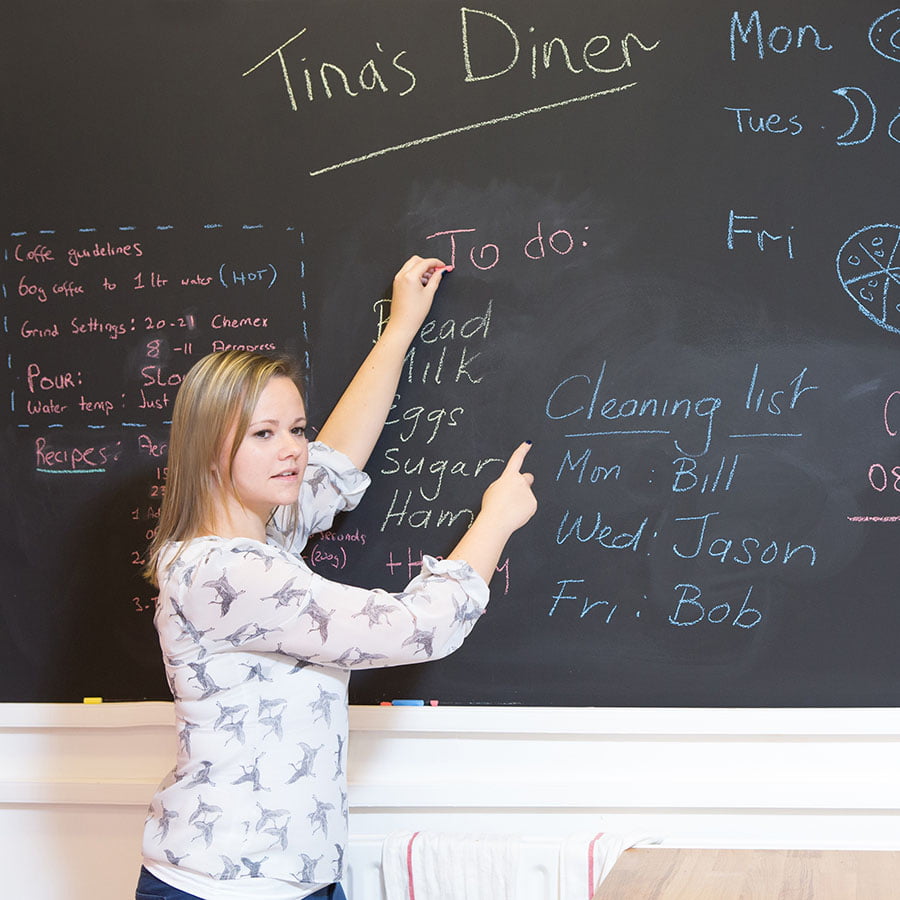
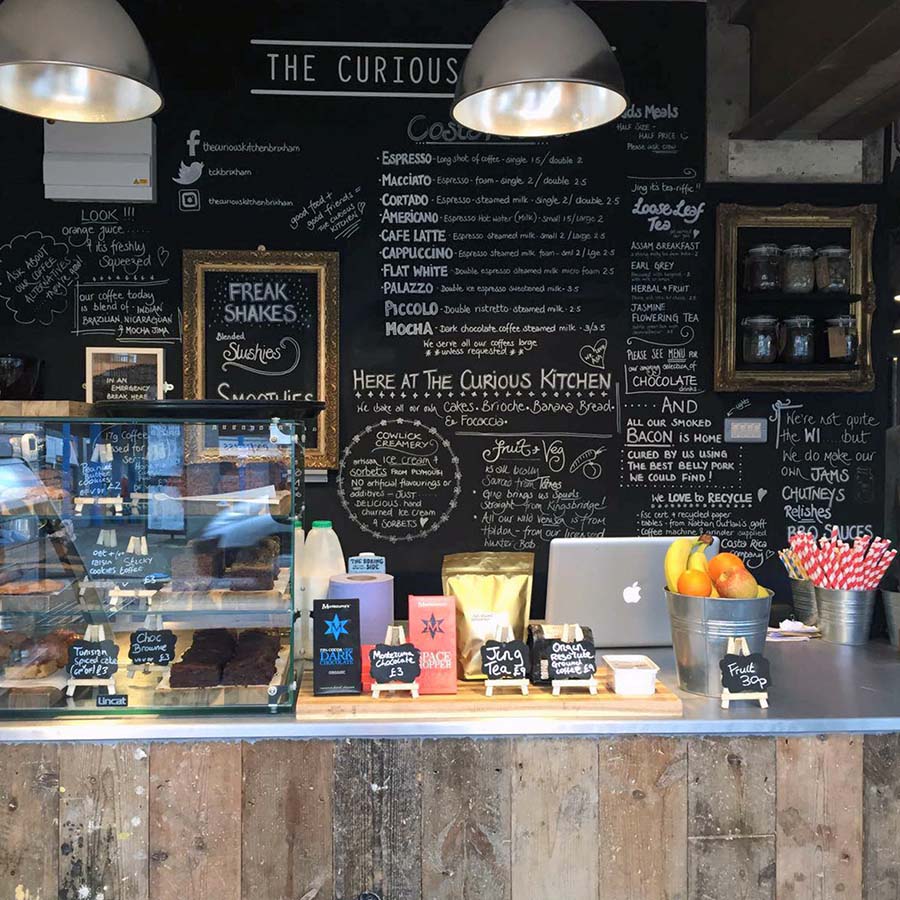
While schools and universities are rapidly moving away from chalkboards or painting their old chalkboards with dry-erase whiteboard paints, no one can deny the old world charm of a black chalkboard. And that is why retro style chalkboards are so popular in cafes, restaurants, and even in offices that want to keep things fun and retro.
Let’s just say chalkboards are a fond reminder of a century-old heritage. But you can make a chalkboard significantly more interesting with the help of magnetic chalkboard paint.
What is magnetic chalkboard paint?
Magnetic chalkboard paint is not a single product, it is a process that involves two different products: Magnetic Paint, Super Magnetic Paint or Magnetic Plaster with Chalkboard Paint.
We have two new products with 2-in-1 functionality. Super Magnetic Chalkboard Paint for a strong magnetic writable surface, and Ultra Magnetic Chalkboard Paint for an extra strong magnetic chalkboard surface. These can be used in classrooms, meeting rooms and even in residential spaces.
How to create a magnetic chalkboard?
The first thing you need is a part of a wall or an old chalkboard that you want to turn into a magnetic chalkboard. Mark the area of the wall where you want to apply the magnetic chalkboard paint and then follow the steps.
Sand the surface to ensure its reasonably smooth. If the surface is untreated or porous, apply 2 coats of white primer to prepare it. If there are any holes or cracks in the surface, you can use a regular decorator’s filler to fill them before applying the primer.
Apply three coats of smart magnetic paint or four coats of super magnetic paint (for stronger magnetic qualities) with sufficient time in between coats for the paint to dry. You will have a dry, dark grey surface in the end. Sand it lightly to ensure there are no surface texture..
Apply 2 coats of black chalkboard paint with 2 to 4 hours of drying time between coats to allow the paint to dry.
Wait for 24 hours for the paint to fully dry and you will have a black, magnetic chalkboard with an extremely smooth surface.
You can use dry and liquid chalk to write on the surface. You can use a regular duster or a microfibre eraser cloth to wipe it clean. You can use magnets to stick photos, charts, cards, and whatnot on the surface. With one neodymium magnet, you can stick up to 4 sheets of paper on the magnetic chalkboard, 5 if you use the super magnetic paint.
Things to remember while using chalkboard paint
When using a new chalkboard paint surface or any chalkboard its great to season or condition the surface before use.
Take a piece of chalk on its side and rub it all over the surface to cover its entirety in chalk. Then, spread it around with with a dry cloth.
This chalkboard conditioning or seasoning technique will close all the pores of the chalkboard paint and make it easier to write on with chalk.
Use cases for magnetic chalkboards at Home and at Work
Write messages, brainstorm ideas, update plans, change menus, it’s a brilliant mode of communication with your customers, employees, or the people at home.
Magnetic chalkboards at a cafeteria
You have seen cafes use chalkboards to update menus and announce daily specials. How cool would it be if you could do all that and highlight important announcements like special discounts and new additions to the menu by sticking bright notes with magnets to the board?
That’s exactly what the magnetic chalkboard paint allows you to do.
Magnetic chalkboard at home
At home, a magnetic chalkboard can be a fun and effective mode of communication and collaboration, especially if you have children.
You can write down chores, stick achievement notes with magnets, and leave a message if you have to leave unannounced.
Make travel plans with your family – make it interesting by sticking notes about different spots.
It gives children a space to get creative and draw their hearts out.
All chalkboard paints manufactured by Smarter Surfaces are environmentally friendly and free of toxic chemicals, odour, and fumes. The paints exceed all safety and quality standards set in the UK and are absolutely safe for children.
The best part is, that you can apply the magnetic chalkboard paint without any professional help. We send everything you need to apply the paint with the paint. There’s a detailed application guide to help you in the DIY journey. If ever in doubt, you can contact our product advisors for help.
The advantages of using magnetic chalkboard paint over buying a chalkboard
Chalkboards are not inherently magnetic. You can try hanging a writable metal sheet, but they are heavy, might take a toll on your wall, and are limiting in terms of space.
You can create a magnetic chalkboard on any smooth surface regardless of its shape and size. You can paint around obstructions and end up with a beautiful creative space.
You cannot break a magnetic chalkboard wall and the paint comes with a 5 year performance guarantee. So, it’s a better investment than a chalkboard.
The magnetic chalkboard paint is scratch-resistant.
If you are unsure if your surface is suitable for a magnetic chalkboard finish, or wondering how much product you should purchase, we have a solution for you. Book a free video consultation and show us the surface. The industry experts at Smarter Surfaces will help you find the right fit and help you throughout the process of installation.